Title: Love and War and Snow
The Girls cover the diverse topics of love (Rory, Lane), war (Luke), and snow (Lorelai). Not very inventive for a title, but it’s accurate.
Summary: Lane joins Marching Band and the Rich Bloomingfeld Fan Club. Rory has the cookies and the love and the Dean. Mr. Medina is sacrificed by the snow gods and ends up in Stars Hollow, much to Lorelai’s pleasure and Luke’s dismay. Taylor and the townspeople hold their annual Battle of Stars Hollow reenactment. Old softy Luke brings them cocoa and coffee. Rory introduces the Gilmores to frozen pizza.
LORELAI: (to Lane) Sergeant Pepper.
Sgt. Pepper’s Lonely Hearts Club Band was the name of The Beatles eighth studio album, released in 1967. The band had just taken a three month holiday and permanent break from touring when Paul McCartney came up with a concept for a new album supposedly from the fictional Sgt. Pepper’s band – rather than The Beatles themselves. Music history buffs usually regard this album as one of the first concept albums, allowing The Beatles to experiment with their sound by posing as another band altogether. The album included now-classics like “When I’m Sixty-Four”, “Lucy in the Sky with Diamonds”, and “With a Little Help from My Friends.”
The reason Lorelai calls Lane “Sergeant Pepper” is that her band uniform bears a striking resemblance to the costumes The Beatles wore for the album cover artwork, especially George Harrison. The album artwork was the subject of much speculation and debate, as it included images of many historical figures all lined up behind wax figures of the four Beatles and the men themselves. I’ll let you dig into the theories of who was included, where they were placed, and why. It’s a perfect example of the insane Beatles fan theories that developed throughout their heyday.
RORY: Right, Rich Bloomingfeld. Does he still wear the Star Trek shirt?
A classic nerd indicator. Star Trek started as a TV series in 1966 but has since become an entire media universe. The original show followed Captain James T. Kirk and his crew aboard the USS Enterprise spaceship as they had plenty of interstellar adventures. There have since been five additional TV series, thirteen full-length movies, plus an animated series, games, and a theme park attraction in Las Vegas. Star Trek has had a huge impact on popular culture, creating an entire nerd subculture of fans who call themselves “Trekkies”. It’s worth noting that Luke gets teased for being a Trekkie in Season 2, Episode 8 when Mia comes to visit and tells the Girls about Luke as a teenager. Apparently wearing a Star Trek t-shirt is a teenage right of passage in Connecticut.
RORY: I told him he would, but he was all, ‘Forget Jane Austen, you have to read Hunter Thompson.’
Jane Austen (born 1775 and died 1817) was an English novelist who wrote about and critiqued the customs of the pre-Victorian-era “landed gentry” class. Her most popular works included Sense and Sensibility, Pride and Prejudice, and Emma. Austen explored the concepts of female independence, marriage, and social standing. Her biting wit, use of irony, and social commentary have won her praise from critics and teachers for more than 200 years. She received little acclaim in her own time but has since lived on, as many of her novels have been assigned as classroom reading and remade into popular movies. Who can forget Keira Knightley and Matthew McFayden’s performances in the 2007 remake of Pride and Prejudice? I am still thinking about that one.
Hunter S. Thompson, the counter-culture hero we all need. What can I say about 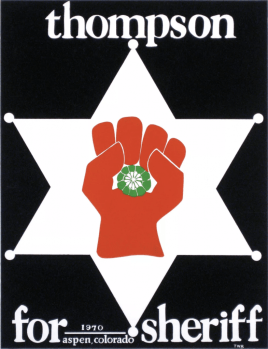 Hunter? He began his career as a journalist taking on stories about the Hells Angels, the Haight-Asbury drug culture, and the 1968 Democratic National Convention. He quickly became an icon for his first-person, in-the-muck “Gonzo” journalism style, a term first created to describe Thompson’s critique of the Kentucky Derby. In 1970, heran for Sheriff of Aspen where he lived on the “Freak Power” ticket, but narrowly lost. Thompson is probably most well-known for his 1972 book “Fear and Loathing in Las Vegas”, which started as a real-life assignment from Sports Illustrated to cover the Mint 400 motorcycle race in Las Vegas and became a serialized story in the Rolling Stone, a book, and the 1998 film starring Johnny Depp. It’s a roman a clef of sorts as Thompson put himself in the main character, Raoul Duke. His “attorney” Dr. Gonzo, was based on his friend Oscar Acosta who accompanied Thomson on his real-life trip to Las Vegas to cover the Mint 400. In the book, Duke and his companion (always referred to as “my attorney”) become sidetracked by a search for the American Dream (something Thompson spent much of his career writing about), with “two bags of grass, seventy-five pellets of mescaline, five sheets of high-powered blotter acid, a salt shaker half-full of cocaine, and a whole galaxy of multi-colored uppers, downers, screamers, laughers… and also a quart of tequila, a quart of rum, a case of Budweiser, a pint of raw ether, and two dozen amyls.” Thompson committed suicide at the age of 67 in 2005.
I highly recommend reading anything by Hunter S. Thompson, but especially a book of his letters from 1968 to 1976 titled Fear and Loathing in America. It actually kind of bothers me that Hunter S. Thompson is attached to Dean, when Jess is actually pure Hunter. But I guess we haven’t met Jess yet so I’ll forgive Amy Sherman Palladino for this one.
RORY: How about a little Charlotte Bronte?
Charlotte Bronte was another English novelist, living in the period right after Jane Austen (born 1816 and died 1855). She was the oldest of the three Bronte sisters, who were all novelists. Charlotte’s most famous work, Jane Eyre, was published in 1847 under the pseudonym Currer Bell to hide her gender. Like Austen, Bronte’s book focused on the topics of feminity and class in English society. Sadly, she died at the age of 39 from pregnancy complications, just months after her wedding.
LORELAI: Well, don’t panic. I’ll get the ark, you get the animals.
This isn’t really a pop culture reference but it’s still a good one! Lorelai is referring to the biblical tale of Noah’s Ark. God sends a flood to wipe out all the bad people and tells his biddy Noah that he should build this HUGE boat and start rounding up male/female pairs of every animal species to bring in his boat, so they can repopulate the earth after the bad people are all gone. Noah must have been on one because he actually did it! His ark saved the animals and God sent a rainbow to let Noah know everything was cool after the flood. Does that make Lorelai Noah and Emily God? Or vice versa? Anyway, love the reference.
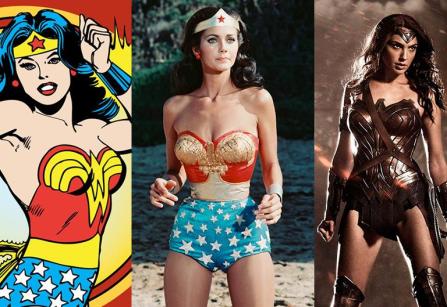
LORELAI: Well, uh, gee, Mom, I don’t know, let me see. Black ice, treacherous roads. . . I guess I’ll just put on my red, white, and blue leotard, grab my golden lasso and fly the invisible plane on over.
Ooooh, what a well-placed reference Lorelai! She didn’t explicitly mention Wonder Woman but we all know who owns the invisible plane and wields the Golden Lasso of Truth. Wonder Woman, or Princess Diana of Themyscira, is a (sadly) fictional superhero in the DC Comics universe. She’s a member of the Justice League, originally from the Amazon island of Themyscira, and daughter of the Greek god Zeus and Hippolyta. She has super-human strength, hyperfast speed, the ability to fly, and near-immortality. She also has Amazonian-technology like the Golden Lasso of Truth, bracelets and shield that can stop bullets, a tiara used as a projectile, and more crazy-fun things like her invisible plane. Wonder Woman has been featured in comic books, TV shows, and movies including the recent 2017 adaptation starring Gal Gadot as Diana. Many Wonder Woman storylines have featured Diana rescuing herself from trouble, bucking the damsel-in-distress trope that is often popular in superhero stories – making her the perfect feminist icon.
LORELAI: Absolutely. All right, now, honey, tell Grandma that you arrived there not a member of the Junior League, I’d like you to leave there the same way.
Junior League is a women’s charitable organization with chapters all across the US. It started in 1901 by a railroad owner’s daughter who wanted to help integrate different classes of society. The Junior Leagues mainly do volunteering and fundraising work for local causes.
It’s funny that Lorelai mentions the Junior League here instead of the Daughter’s of the American Revolution, which we all know Emily is a die-hard member of and the organization that Emily would likely force Rory to join anyway rather than the Junior League. Rory does become a DAR member later in that dreaded Season 6 storyline.
LORELAI: Because “it’s tradition”.
This is a Fiddler on the Roof reference, especially because of how Lorelai pronounces “tradition.” It’s a riff on the opening number from the 1964 musical where Tevye, the eponymous fiddler, sings about the importance of tradition in his culture. Fiddler on the Roof was set in the fictional town of Anetevka, during Imperial Russia of 1905. The musical was the first to reach 3,000+ performances and became a hit movie in 1971 starring Barbra Streisand. We get to see Kirk as the Fiddler in the Stars Hollow middle school production during Season 5, a role he was born to play.

MAX: A match made in heaven. LORELAI: Or in Bellevue.
Bellevue Hospital in New York is often used as a metonym for a psychiatric hospital. Bellevue Hospital built a “pavilion for the insane” in the hospital grounds in 1879, something considered revolutionary at the time. The Bellevue Hospital psych ward closed in 1984 and now is partially used as a homeless shelter. Lorelai references Bellevue later in Season 6 when she’s trying to convince Luke to do an all-out interactive Halloween display to rival Babette and Morie. She wants to do a “Mad Scientist” bit with quips like “Hey, who here is from Bellevue?” and “‘Girl Interrupted’? Now that’s my idea of a feel-good movie”. I, for one, would have loved to have seen Lorelai pull linked sausages out of Luke.
RICHARD: You also knew that you wanted to marry Errol Flynn. RORY: Really? Grandma had a thing for the pirate guy?
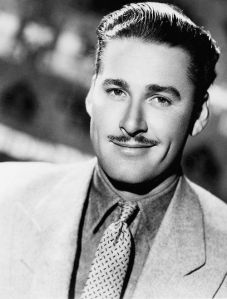 Ewwww Errol Flynn? Gross, Emily! Errol Flynn was an Australian-American actor during the Golden Age of Hollywood during the thirties and forties. He was mostly known for playing swashbuckling-type characters like Robin Hood and Captain Blood. But his reputation off-screen was much less heroic – he was known for his hard-drinking, womanizing, and narcotics abuse. Classy. He was also accused of two separate instances of rape by two 17-year-old girls and was accused of gross voyeurist tricks like peepholes in the bathrooms in his home. Seriously, disgusting. But he did have one hell of a mustache like Richard said.
LORELAI: Oh, that’s The Cure. I have to go back in there.
The Cure are an English rock band, often associated the goth and post-punk movements – although lead singer Robert Smith hates when The Cure gets categorized. But whether he likes it or not, his stage presences and the band’s moody songs have been linked with goth and punk since the beginning which is why Lorelai immediately knows that The Cure = Sad Lane. Smith has been the only constant member of the band, with twelve other members joining in the fun throughout the years. The Cure has released thirteen studio albums and in 2019 is working on it’s fourteenth. Some of their most mainstream tracks include “Just Like Heaven”, “Friday I’m In Love”, and “Picture of You” which Lane blasts to soothe her pain in this episode.
LORELAI: I swear to God, if this wasn’t a major Judy Blume moment, I would kick her cute little butt right out of here.
Synonymous with coming-of-age, Judy Blume is an American author is YA fiction, most notably Deenie and Are You There, God? It’s Me, Margaret. Her books have covered taboo topics like puberty, menstruation, sex, and birth control, earning her praise from parents, teachers, and librarians for breaching the tough topics teens and tweens need to hear about. Judy Blume pops up again when we met April in Season 6, when Luke discovers photos of April wearing a back brace after she read Deenie.
 Lorelai Explains It All